Kayaking in the Desert

When I moved to the desert, I thought I would be letting go of one of my favorite things: the water. It cannot be overstated: I. Love. The. Water. I swim, and when I’m not swimming I’m paddleboarding, and when I’m not paddleboarding, I’m kayaking. Give me any activity on or near the water and I am a happy, happy girl.

So imagine my surprise when I found two of my favorite things, adventure and water, in the desert!

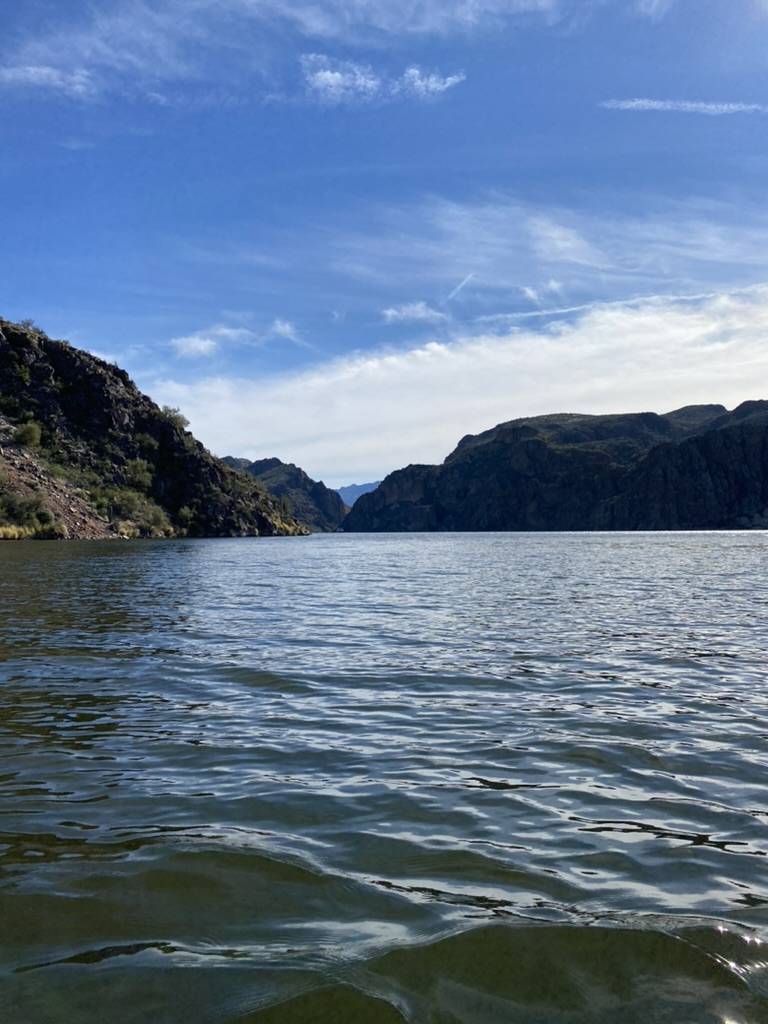
Less than an hour from Phoenix, nestled in the Tonto National Forest, sits Saguaro (pronounced Sah-wah-ro) Lake, which is actually a reservoir created in 1930 from the Stewart Mountain Dam, the last of which to be built off the Salt River. The lake itself has 22 miles of shoreline, making it a popular spot for boating, sailing, jet-skiing, and, yes, kayaking.

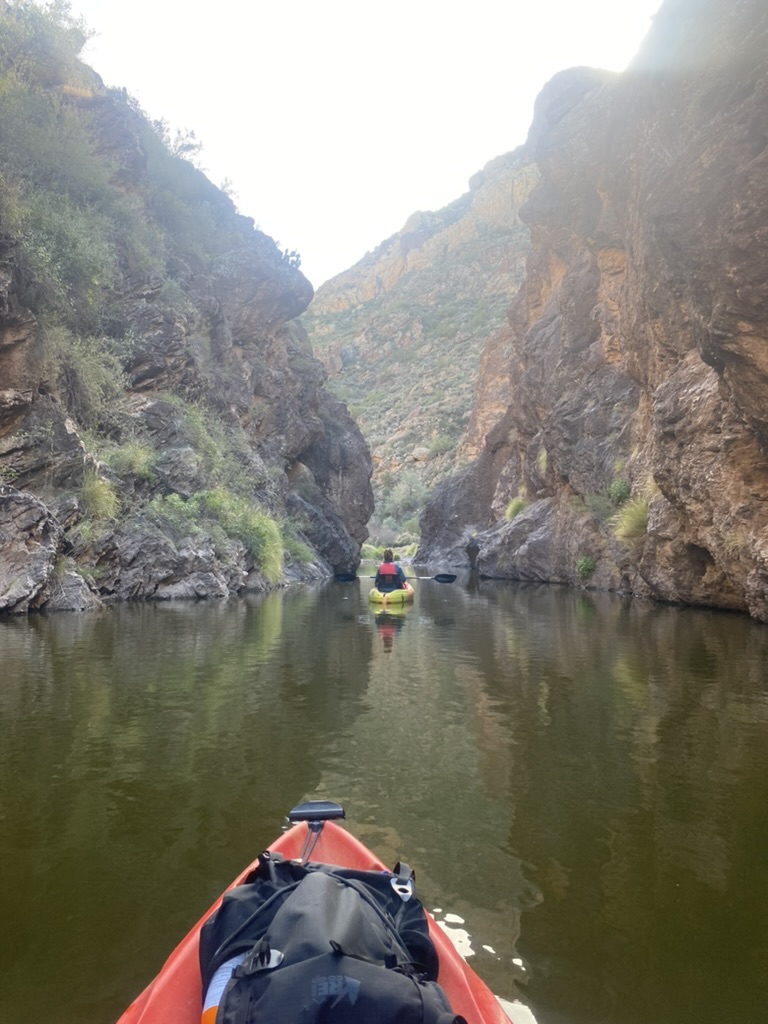
For my inaugural paddle, I turned to Saguaro Lake Ranch. For $50, they outfitted me with a kayak, a life vest, a paddle for two hours, and some tips on where to look for Big Horn Sheep and other wildlife, like Bald Eagles. They also transported us from to and from their ranch to the launch site, and they even put the boats in the water for us. It was the easiest launch I have ever had!

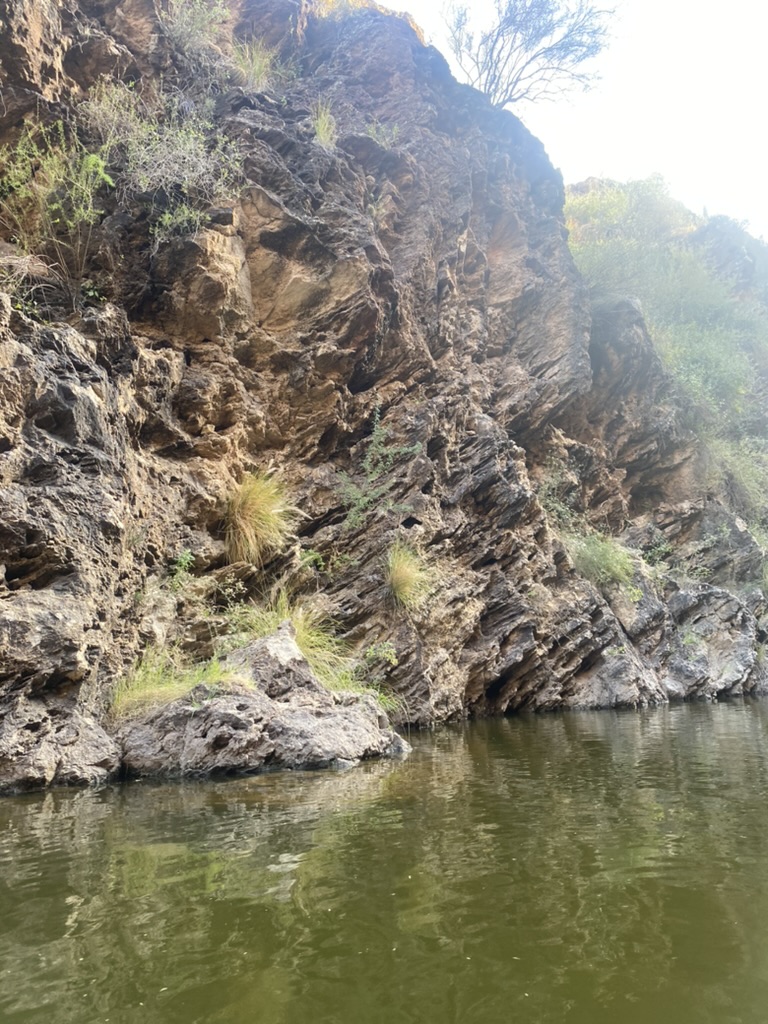
We were midweek in the middle of winter, so we had the lake pretty much to ourselves. Two hours on the water in the land of eternal sunshine was a dream: we found our way down a slot canyon, saw osprey and herons, and enjoyed the many canyon rock formations that surrounded us.

If you do plan to self-launch with your own gear, there are a few things to note. There is an $8 daily pass needed for parking in the Tonto National Forest , plus $4 for each watercraft you are launching, and Saguaro del Norte is where you will want to park and launch.

Or, turn to Saguaro Lake Ranch for a kayak rental – they will not let you down!

And as always with any kind of outdoor activity, a little PSA…remember to LYP:

Don’t LITTER.
YIELD to hikers that are climbing.
PACK in/PACK out.

Friperie: Thrifting in Montreal

The first thing that strikes me when wandering the streets of Montreal is just how charming it all is. Brownstones, boutiques, ancient stone buildings…it feels more Europe and less Canada.

One thing I love doing while traveling is thrifting. It is a great way to find unique pieces, unknown (to me) brands, and clothes that now hold a special place in my heart.

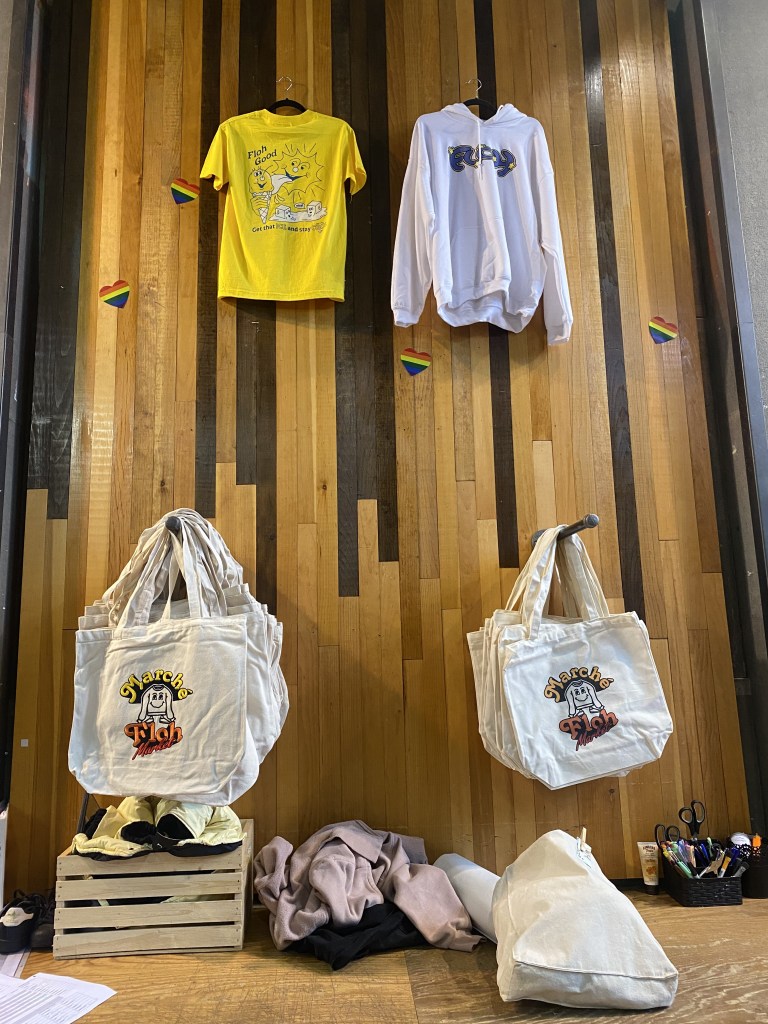
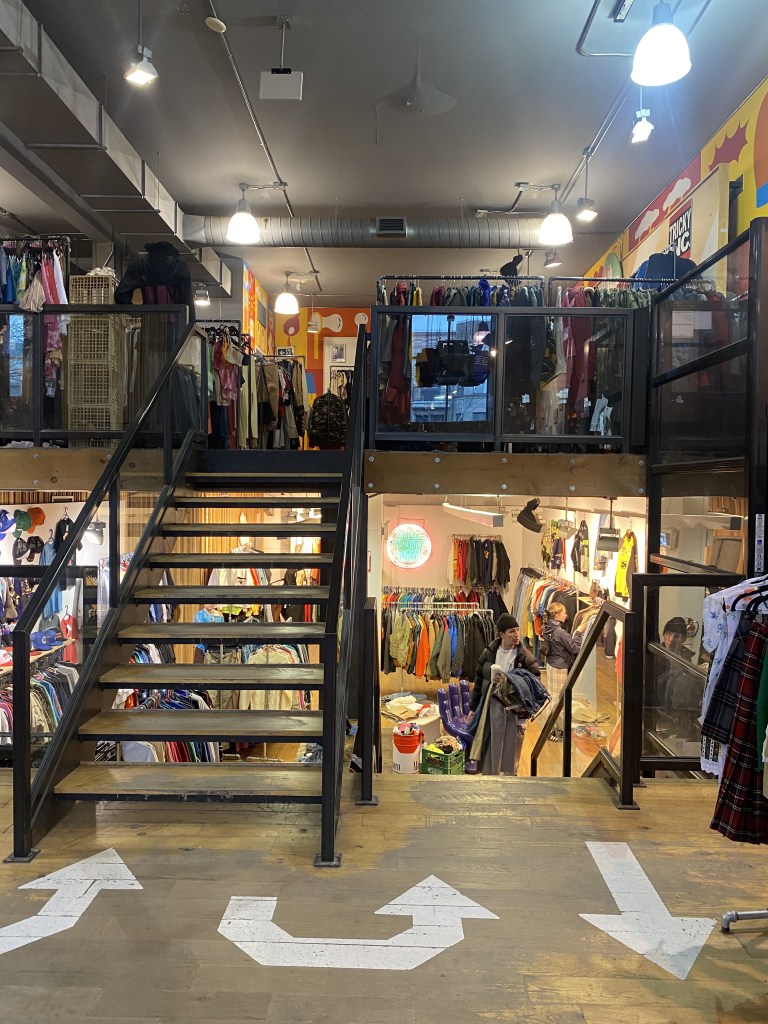
My first stop was at Marche Floh, a three story vintage store on Saint-Denis street in Le Plateu-Mont-Royal neighborhood. This is a definite must-do while in Montreal, not only because of the massive amount of curated and excellent vintage finds, but because of their unique business model. Marche Floh offers their brick-and-mortar space to local entrepreneurs, each hanger in the store representing a different independent vintage reseller. Since each reseller is hand picking items to highlight at Floh, the selection is exceptional. I found cute sweater vests, vintage blouses, and a vintage slip that I could not live without. I loved that I felt that I was supporting small businesses while also adding unique pieces to my wardrobe.

Next up, Village des Valeurs, or as I know it in the States: Value Village.

I love Value Village, and frequent my local spot in Scottsdale pretty regularly. I always, always find something. On my trip to Montreal, we had an unexpected few rainy days and with lots of walking on the calendar, I knew I needed to find a poncho, raincoat, or something to keep me dry while I was there. I was delighted to find something I know and love so close to me in the Hampstead neighborhood and decided to look there for something dry.

My first impression of Village Des Valeurs was the size. To call this place a store is wildly underselling the scale, which in my mind was more of a warehouse. I was impressed by how organized and plentiful the store was. I found it hard to pull myself away from each section as there was such an amazing selection.

Ask and the universe delivers: when I finally did make my way to the coats section, there it was. A rubber raincoat without so much as a scuff on it, in absolutely perfect condition, in a beautiful matte navy color. And the price! $18.49 CAD! Sold!

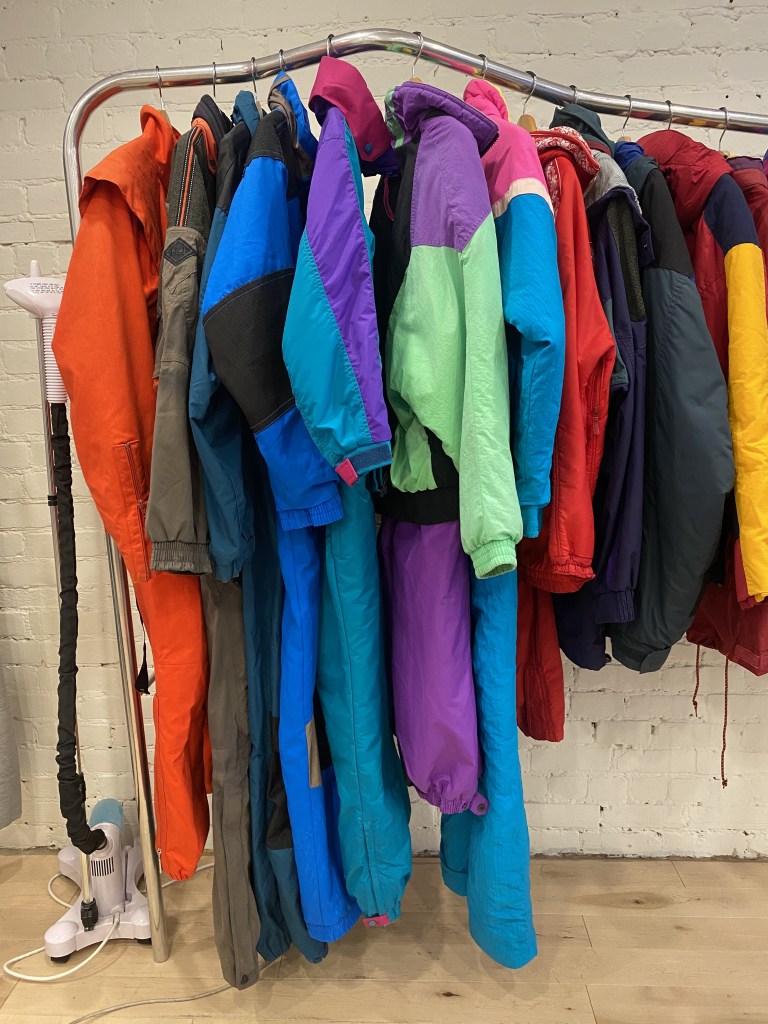
Finally, while in the hyper-chic area of St. Laurent, I stumbled into Ribotti Vintage, an elegant and curated vintage, retro winterwear. Think: Snowsuits from the 90s, wool coats, and snowpants.

They also had a beautiful selection of vintage denim and my absolutely favorite, old worker jumpsuits.

I barely scratched the surface thrifting in Montreal, and I’m already daydreaming about going back for a second pass.

How not to die while swimming with dolphins

I am not entirely sure when the dream to swim with dolphins started to take root. Was it one of the endless summer days I spent swimming in a docile lake, pretending I was a dolphin? Was it their understood kindness, their keen intellect, their impressive flips? I had heard of tours where one could swim with dolphins, but every time I took a closer at the pamphlets, I grew discouraged by what I saw. Glossy photographs of large dolphins, small containers, tourists slicked over in sunscreen in a glorified fish tank clinging to miserable looking dolphins. No thanks.

In New Zealand I found what I thought would be a true swimming with dolphin experience. This tour was not held in a tank hanging off a dock of some tourist-trap resort. Instead, we would board a boat and swim with a pod of bottlenose dolphins in the wild. This, I thought, would be magical.

We boarded the boat and cruised through the glassy water, our captain safety briefing us and then discussing the plan. They were tracking the different pods of dolphins, and because of conservation laws, we could only have so much time with each pod before we would have to turn back. “I’m following one right now and I’m pretty sure we will get you in the water very soon!” He chirped over the loudspeaker, and with that, my beloved and I gazed out at the magnificent scenery along the New Zealand coastline.

As promised, it was not long and we were nearly on top of a pod. Only now, as I gazed below the boat into the dark blue vastness of the water, did I realize that my smug desire to swim with dolphins in the wild might actually be… dangerous.

“They’re right below us!” Our captain exclaimed, and I nodded quietly as I looked and saw absolutely nothing. “Quick! Put on your wetsuits!”

Everyone on the boat scrambled to find a wetsuit, each of us struggling to get the neoprene over our bodies while rocking gently on a boat and trying to hurry before the pod disappeared.

Wetsuits on, we were handed snorkel masks and our next set of instructions: each of us were to sit on the back of the boat, from which two long bars extended off each side.

“So when I say ‘go’,” our captain explained, “grab hold of the bar, and scootch out to the end, then the next person will go, and so on. There should be four people on each bar.” We all looked at each other.

“Then,” he went on, “we are going to pull you through the water with the pod.”

Was it the use of the word “scootch”? Perhaps it was the precarious nature of keeping a death grip on the metal bar, each of us undoubtedly mentally recounting pull ups in gym class and questioning our strength. We all seemed to share a collective “WTF” thought.

I was starting to feel the panic rise in my chest just as the other crew prodded us to get moving, and, stuck in between two others, I had no choice but to scootch my way into the deep blue.

Clinging to the bar, I dipped my head below the surface and saw the tunnel of darkness. No dolphins. “They are down there!” The crew cheered to us, which enhanced the terrifying feeling of a great unknown just below my feet.

Just when I thought it could get no worse, the engines next to me roared, and like a piece of bait on a line, I was being dragged through the freezing dark blue waters. I tried to leave my head below water, but the force of the boat motoring through the choppy waters had me skipping across the surface like a stone.

It didn’t take long before common sense bubbled to the surface and I raised my hand, signaling to pull me in from the deep dark sea. Others did the same and it was time to turn back from the pod.

Disappointed, I shed my wetsuit and wrapped myself in a towel and stared off into the distance, trying to make sense of what had just happened. Just as I came to terms with the fact that this trip was a complete flop, something caught my eye.

Right next to the boat a fin emerged, then another. Soon, we were surrounded by dolphins, some leaping out of the water, others swimming just below the surface.

I stared in awe as they danced around us, grateful for this magical moment. It might not have been the experience I had planned, but as I hung my feet off the bow of the boat, the dolphins creating beneath me, I realized it was still a dream come true.

Sick in Sicily

“It says there is an ER not far from here.” I was looking at my phone just after midnight, my husband laying next to me, ashen. My beloved had been vomiting for two days, and my trips to the Farmacia to purchase electroliti had seemed fruitless.

We were in our second night of tossing and turning, punctuated by mad dashes to the bathroom, when I finally put my foot down: we need to go to the ER. At the very least, I reasoned, there would be IV fluids. We threw some clothes on and this was how I found myself racing through the ancient city of Ragusa just after midnight, winding through the cobblestone streets which were clearly not designed for cars.

It all started two nights before, after staying in the World’s Most Charming Farm Stay (TM) in Agrigento. Every evening we drank dry red Sicilian wine, petting the farm cats and wandering through the gardens as the heavy yellow sun dropped behind the fields. This, we thought, was a holiday.

When we ate at a restaurant that promised true Sicilian Pizza, we were not let down. It was an Italian vision: beautiful local salami topped with farm fresh arugula, tomatoes so fresh they burst in your mouth, olives brined just down the street, salty and perfect, all atop a thin crisp crust, bubbled from the wood-fired oven.

We had so much left over it seemed a waste to leave it on the table, so we packed it up and threw it in the small fridge at our farm stay. The next morning we faced Questionable Choice Number One: What do we do with all this leftover pizza? My beloved determined that the pizza, barely cooled from our mildly functioning fridge, must come with. A snack for later, he reasoned, and I shrugged as he threw it on the floor of our small Fiat 500.

The next two hours we drove through the scorching hot countryside, when we approached Questionable Choice Number Two. Pulled on the side of the road to breathe in the rolling countryside, my beloved reached for the pizza.

I eyed it suspiciously, the arugula now badly wilted and the salami glistening with beads of meat sweat. “Hmm,” I said, standing on the side of the road as my husband lifted the piece to his mouth, “That looks…maybe…bad?” He shrugged me off and offered me a bite. I shook my head, reasoning that I was saving myself for more Arancini down the road.

These two questionable choices was what had led us here, to the grim healthcare system that is rural Sicily. Gurneys lined the waiting room, the rest of the space empty save for a handful of chairs, a low flickering neon light, and walls that appeared to be crumbling around us.

Hours passed and finally we felt our fate was about to change. Our name was called and we were led to a gurney, where a woman, who presumably was the doctor, began examining my beloved.

I had been studying Italian for the past two years, but here everything I knew slipped from my brain. I realized I was out of my league.

He has been vomiting for two days, I punched into Google translate.

The doctor took my phone, tapping her response, and so it went, back and forth, a stilted modern note passing.

Has he had Covid? She typed back to me. I shook my head. She stared at me for a beat.

Never? She seemed dumbfounded.

On that, she spun on her heels and we were led out the waiting room, outside to a portable building, where a nurse broke the news through our app: You are in quarantine until your Covid test comes back. We looked at each other confused – he had already been given a Covid test? I asked through Google translate, grateful the app could take the sting out of my delivery.

A different Covid test. We were shepherded to a new area, and, alone at last, we curled up on the gurney together and slept, our Italian holiday in first class accommodations.

Several hours later we discovered my beloved did not have Covid. There were no IVs, no fluids, no offers of food or nourishment. After another few hours of waiting to be dismissed, we left the ER to the warm Sicilian sun, my beloved willing himself better so we might continue our magical holiday.


Cycling Through Amsterdam

I have found there are many archetypes of cyclist here in Amsterdam, where the only way to get around seems to be by bike. It is the Dutch way, the Amsterdammer way, and as a tourist whose main goal is to blend in and not be perceived as a tourist, has quickly became my way to explore this cobbled city.

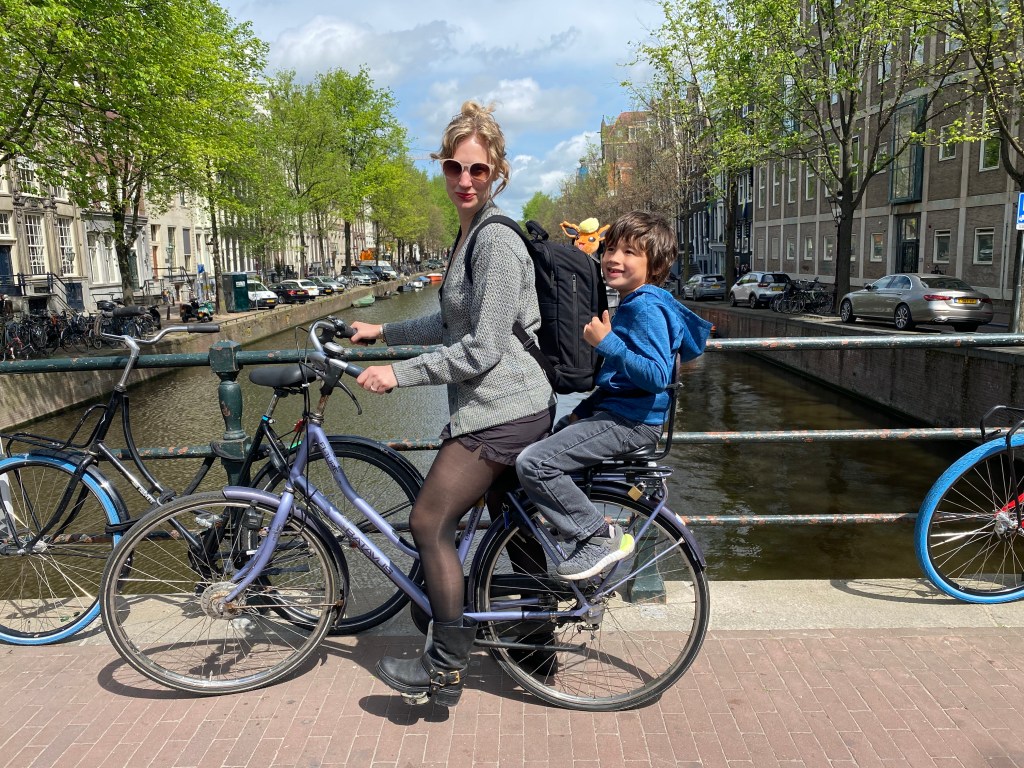
Among these archetypes you have the young and chic: ladies cruising on their omafiets (translated: old lady bike), something that looks like a beach cruiser, only older and clunkier, often adorned with baskets and racks. While the bike may be a beater, the ladies are effortless in their style. Tights and skirts and hair in french twists, oversized sunglasses, and always, always Airpods poking out of their ears, the clear go-to accessory for any Amsterdammer.

Then there are the parents, an endless stream of attractive thirty-somethings, a baby seat in front, an older child seat behind, or for the more boujie of this set, what looks like a Santa sleigh on the front carting children, dogs, and in one case, a small elderly woman donning sunglasses. These bikes are apparently the SUV of Amsterdam, and in true hipster mom vs soccer mom fashion, there is some debate about what kind of person might ride one of these.

We also have the elderly riding sleek, modern bikes in hip matte colors, some complete with built in alarms, which did surprise me as I accidentally bumped into one while unlocking my bike one day. The alarm, in true Dutch fashion, was less a wailing warning to back off, and more of a gentle “ahem” as I clumsily fiddled with my lock.

While the archetypes vary, I have found they all have one thing in common:

They are all faster than me.

Not that riding around Amsterdam is about speed. Still I can’t help but feel that I am getting in the way during the evening commute as I clumsily try to steer my bike, point my finger in the direction I’m headed, and try to merge with 20 speedy Amsterdammers into one slim bike lane. I pedal my legs faster and still within seconds “ding ding” rings behind me and I am being passed, far too close for my own comfort but business as usual for the locals.

My daily inner dialogue is some iteration of the following: “oh no, you’re tire is so close, please do not hit me, ohhhh, keep it steady, one jerk to the left and I take us all down. Oh, please do not fall, I repeat, do not fall. Oh no, I need to turn left, how do I do that when three other roads feed in to this intersection? And there is a train to contend with? Who has the right of way? What do I doooooo???”

Luckily, I have found power in mass: when in doubt, follow an Amsterdammer through the intersection and hope for the best. I can only imagine their inner dialogue as I tail them in as if in a hot pursuit police chase, “I have to lose this girl, why has she been following me for twenty blocks?” Still, it’s worked to keep me alive so far: I have managed without being hit by a car, train, or other bike.

In the few moments when I have found myself riding the wrong direction (which is apparently okay on city streets, but not okay on the bike paths), I have managed to worm my way out of the situation without any grave injury.

And when I have been scolded by another cyclist for any indiscretion, it has been done so in Dutch. I’m just going to call that a win.

xo HZ